206. Reverse Linked List
04 Jul 2024
206. Reverse Linked List (Easy) 反转链表
题干
Given the head of a singly linked list, reverse the list, and return the reversed list.
Example 1:
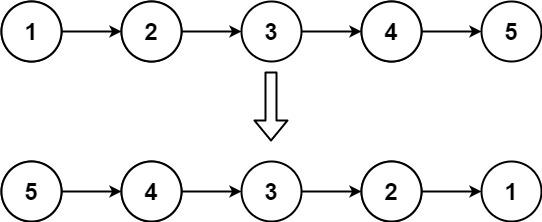
Input: head = [1,2,3,4,5]
Output: [5,4,3,2,1]
Example 2:
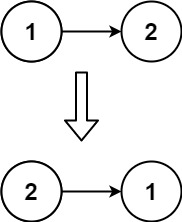
Input: head = [1,2]
Output: [2,1]
Example 3:
Input: head = []
Output: []
Constraints:
- The number of nodes in the list is the range
[0, 5000]. -5000 <= Node.val <= 5000
Follow up: A linked list can be reversed either iteratively or recursively. Could you implement both?
解法
朴素解法(双指针)
第一个元素指向None,然后后续元素逐个指向前一个元素,完毕
# Definition for singly-linked list.
# class ListNode:
#     def __init__(self, val=0, next=None):
#         self.val = val
#         self.next = next
class Solution:
    def reverseList(self, head: Optional[ListNode]) -> Optional[ListNode]:
        pre = None
        cur = head
        while cur:
            next_node = cur.next
            cur.next = pre
            pre, cur = cur, next_node
        return pre
- Time Cost: O(n)
- Space Cost: O(1)
递归解法
其实还是双指针,只是换了递归的写法
# Definition for singly-linked list.
# class ListNode:
#     def __init__(self, val=0, next=None):
#         self.val = val
#         self.next = next
class Solution:
    def reverseList(self, head: Optional[ListNode]) -> Optional[ListNode]:
        return self.reverse(None, head)

    def reverse(self, pre: Optional[ListNode], cur: Optional[ListNode]) -> Optional[ListNode]:
        if cur == None:
            return pre
        temp = cur.next
        cur.next = pre
        return self.reverse(cur, temp)